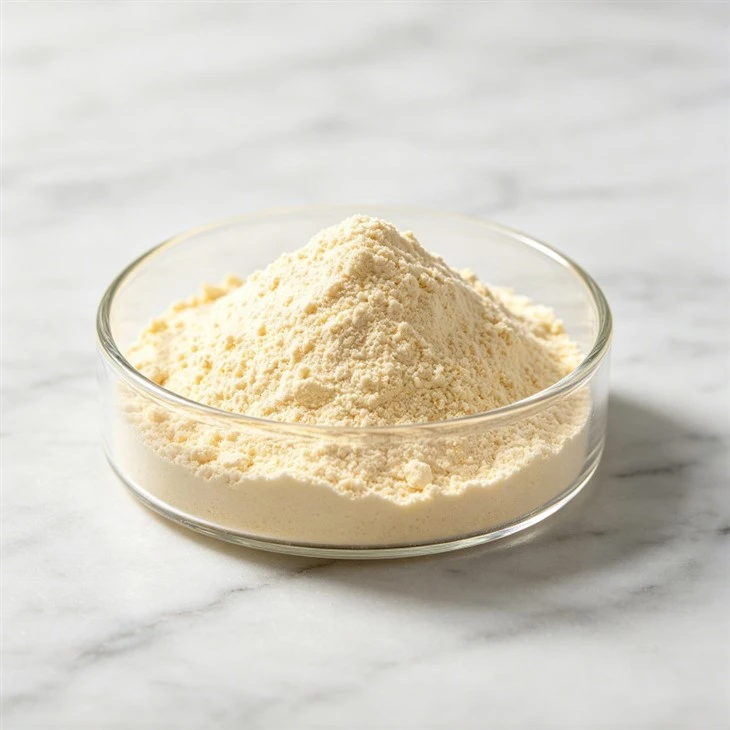
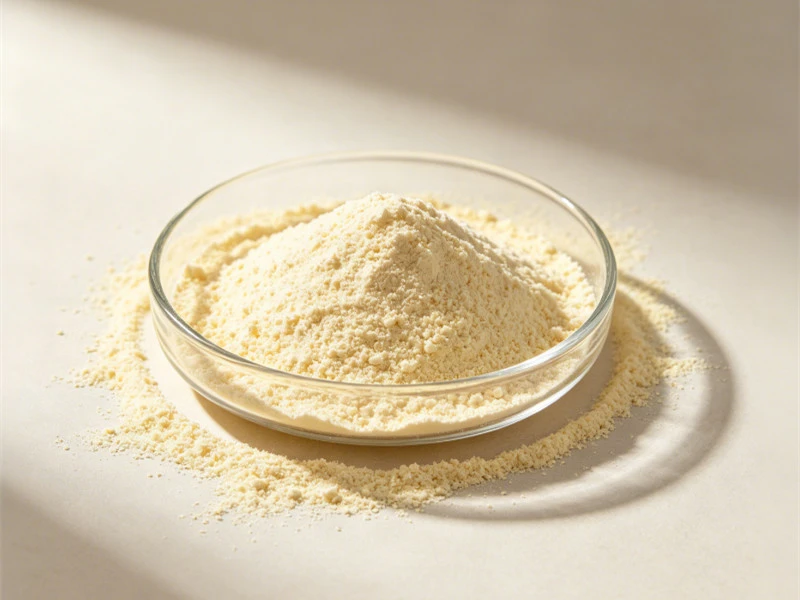
Pea Fiber - High-Purity Insoluble Dietary Fiber from Pea Hulls for Clean-Label Baking, Meat and Meal Replacement
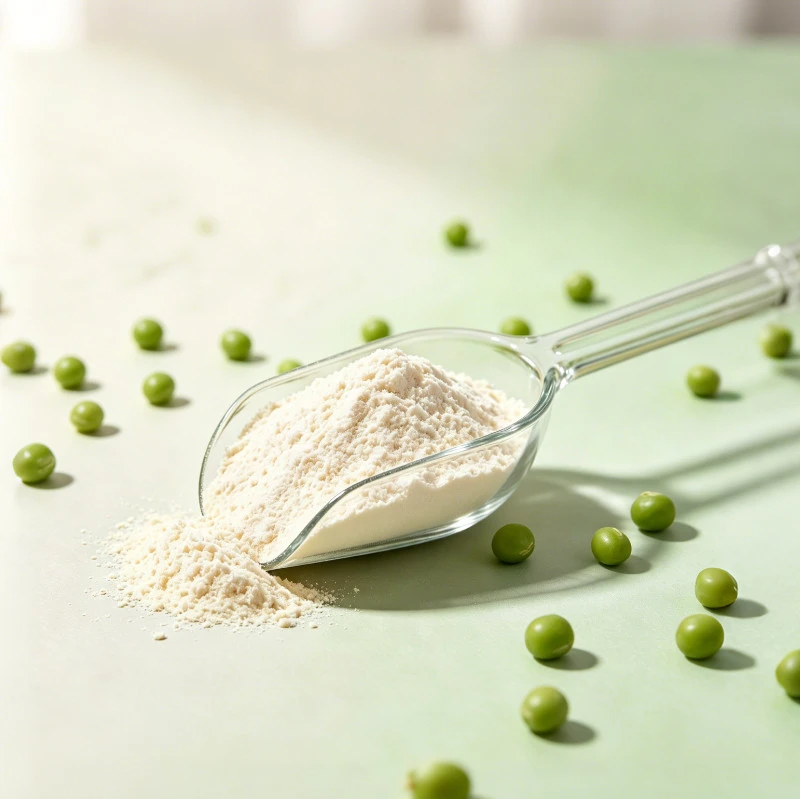
Pea Fiber is a dietary fiber ingredient obtained by washing, drying and milling the de-hulled seed coats of yellow peas (Pisum sativum). It is not pea protein, not a starch extract and not a gum - it is the insoluble cell-wall material of the pea hull, standardized to ≥ 90 % total dietary fiber. Formulation teams use it when they need a clean-label fiber that holds water, binds oil, improves bake yield and carries a "pea fiber" claim rather than a "cellulose" or "wheat fiber" label.
Be realistic about two points. Pea fiber is overwhelmingly insoluble, so it does not gel like inulin or psyllium and it will not deliver a soluble-fiber claim; for that you blend. And at higher inclusion it contributes a faint beige tone and a very mild beany note - in white sandwich bread or vanilla cake this has to be designed around, not ignored. We supply three standard particle cuts so you can match the texture window.
Technical Specifications - Pea Hull Dietary Fiber
|
Product Name |
Pea Fiber (Pea Hull Dietary Fiber Powder) |
|
Botanical Source |
De-hulled yellow pea seed coats (Pisum sativum L. hulls) |
|
Raw Material |
Non-GMO yellow field pea hulls, by-product of pea milling |
|
Regulatory / Compliance |
GB 28050 food ingredient; Halal, Kosher, Vegan, Non-GMO |
|
Appearance |
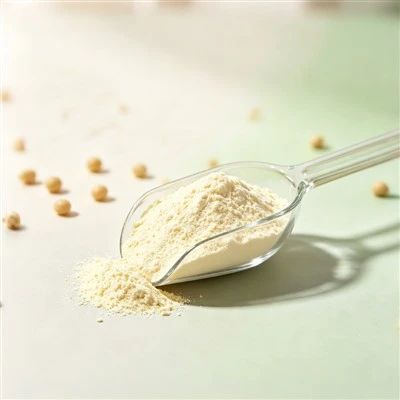
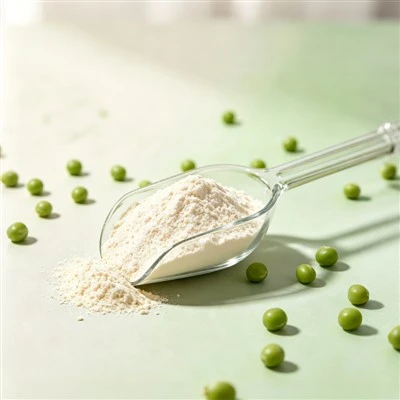
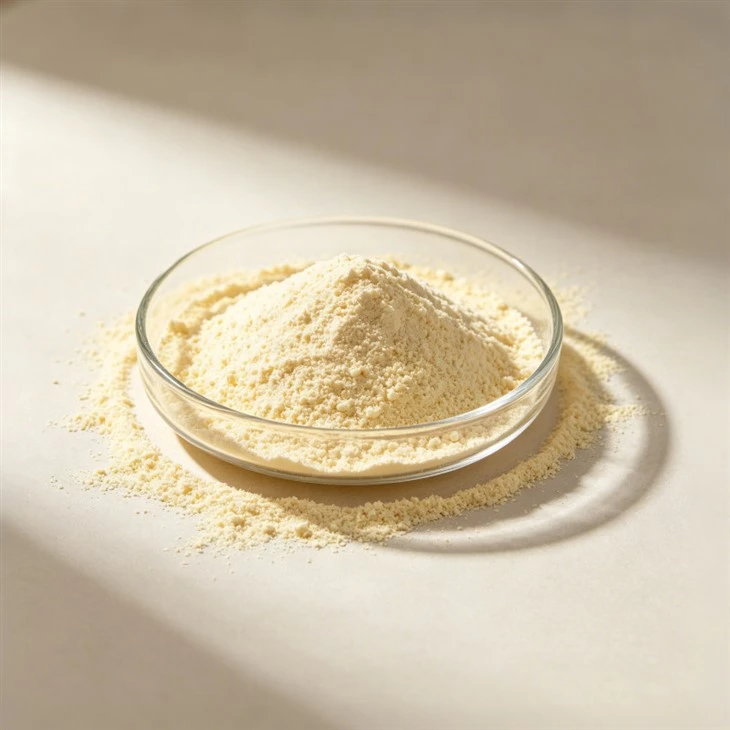
Off-white to light beige fine powder; free-flowing |
|
Odor and Flavor |
Mild, neutral; no rancidity, no off-flavor |
|
Total Dietary Fiber (dry basis) |
≥ 90.0 % |
|
Insoluble / Soluble Fiber |
≥ 85.0 % / ≤ 5.0 % |
|
Protein (dry basis) |
≤ 5.0 % |
|
Moisture |
≤ 8.0 % |
|
Total Ash |
≤ 4.0 % |
|
Fat |
≤ 2.0 % |
|
Starch |
≤ 2.0 % |
|
Particle Size |
80 mesh standard; 100 mesh and 200 mesh on request |
|
Water Holding Capacity |
≥ 5.5 g water per g fiber |
|
Oil Holding Capacity |
≥ 1.5 g oil per g fiber |
|
Bulk Density |
0.40–0.60 g/mL (80 mesh) |
|
pH (1 % slurry) |
5.5–7.0 |
|
Whiteness (Hunter L*) |
≥ 86 |
|
Total Plate Count |
≤ 10,000 CFU/g |
|
Heavy Metals (Pb / As / Cd) |
≤ 2.0 / 0.5 / 0.1 mg/kg |
|
Storage and Shelf Life |
Cool, dry, sealed; 24 months sealed |
What Hull Fiber Does That Gum and Cellulose Do Not
High-purity insoluble fiber, clean label
At ≥ 90 % total dietary fiber on a non-GMO legume, the ingredient carries a "pea fiber" front label - familiar to consumers, free of modified cellulose, wheat or oat, and acceptable on vegan, Halal and Kosher lines.
Water and oil binding that lifts yield
≥ 5.5 g water and ≥ 1.5 g oil per gram. In bread this means softer crumb and longer shelf life; in restructured meat and nuggets it means lower cook loss and juicier bite; in bars it means less sogginess over the shelf-life window.
Three particle cuts to match texture
80 mesh is the general-purpose grade for bread and biscuits; 100 mesh for fine cakes and extruded cereals; 200 mesh for smooth drinks and yogurt where grit must be below the sensory threshold. Tell us the application and we will point you to the cut.
Neutral flavor, mild color
At ≤ 3 % inclusion the beany note is below sensory threshold and the L* ≥ 86 off-white tone disappears in brown bread, chocolate or spiced products. Above 5 % in white cake or clear drinks, run a color and flavor panel before scale-up.
Where Pea Fiber Goes to Work
Bakery is the largest use: 1–3 % in sandwich bread and hamburger buns improves crumb softness and extends mold-free shelf life; 3–5 % in biscuits and cookies adds fiber without hardening the bite; 5–8 % in high-fiber cereal bars and muffins carries the front-label fiber claim. The second channel is meat and seafood: 1–2 % in restructured nuggets, sausages and fish sticks binds water and fat, cuts cook loss and lifts yield without a soy or wheat label.
Meal replacement and nutrition bars are the third channel, where pea fiber pairs with pea protein or rice protein at a 15–25 % fiber load to hit a "high fiber" claim while controlling bar hardness. It is also used in fiber-fortified beverages and yogurt at the 200-mesh cut, where the finer particle size prevents grit and settling. Pair it with soluble fibers (inulin, polydextrose) when your label needs a soluble-fiber line as well.
Processing note: Add the fiber with the dry flour premix and hydrate fully before the proof or cook step - it competes for water, so cut added water by 3–5 % at the 3 % inclusion level and rebalance. Heat stable to 200 °C, so it survives baking, extrusion and retort without breaking down. Avoid prolonged high-shear mixing in liquid systems if you want to keep viscosity in check.
Packaging, Logistics and Commercial Terms
Lead time is 10–20 working days for spot orders. Particle-size customization (100 or 200 mesh) and private-label bags add 5–10 days. Annual contracts lock the fiber floor, the particle cut and the L* floor, and qualify for quarterly price review. Retained samples are held 24 months for audit.
Questions Procurement Teams Ask Us
Hot Tags: pea extract, China pea extract manufacturers, suppliers, factory